
Kerala’s development narrative often highlights literacy and health, yet one of its most persistent vulnerabilities is youth employment. The state produces educated young people at scale, but struggles to convert education into dignified, locally anchored work. By 2047, this gap will widen unless institutions capable of rapid skill formation, behavioral discipline, and social mobilization step into the foreground. One Christian group whose historical growth, organizational energy, and grassroots reach make it unusually relevant to this challenge is the Indian Pentecostal Church of God.
The Indian Pentecostal Church of God emerged in the early twentieth century, shaped by revivalist movements that emphasized personal transformation, discipline, and community solidarity. From its beginnings in central Kerala, the movement expanded rapidly across the state and beyond, particularly among lower-middle-class and aspirational families. Unlike older ecclesiastical institutions that grew through land and endowments, Pentecostal churches grew through people. This distinction matters when thinking about youth empowerment, because the Pentecostal ecosystem has always been youth-heavy, mobility-oriented, and action-driven.
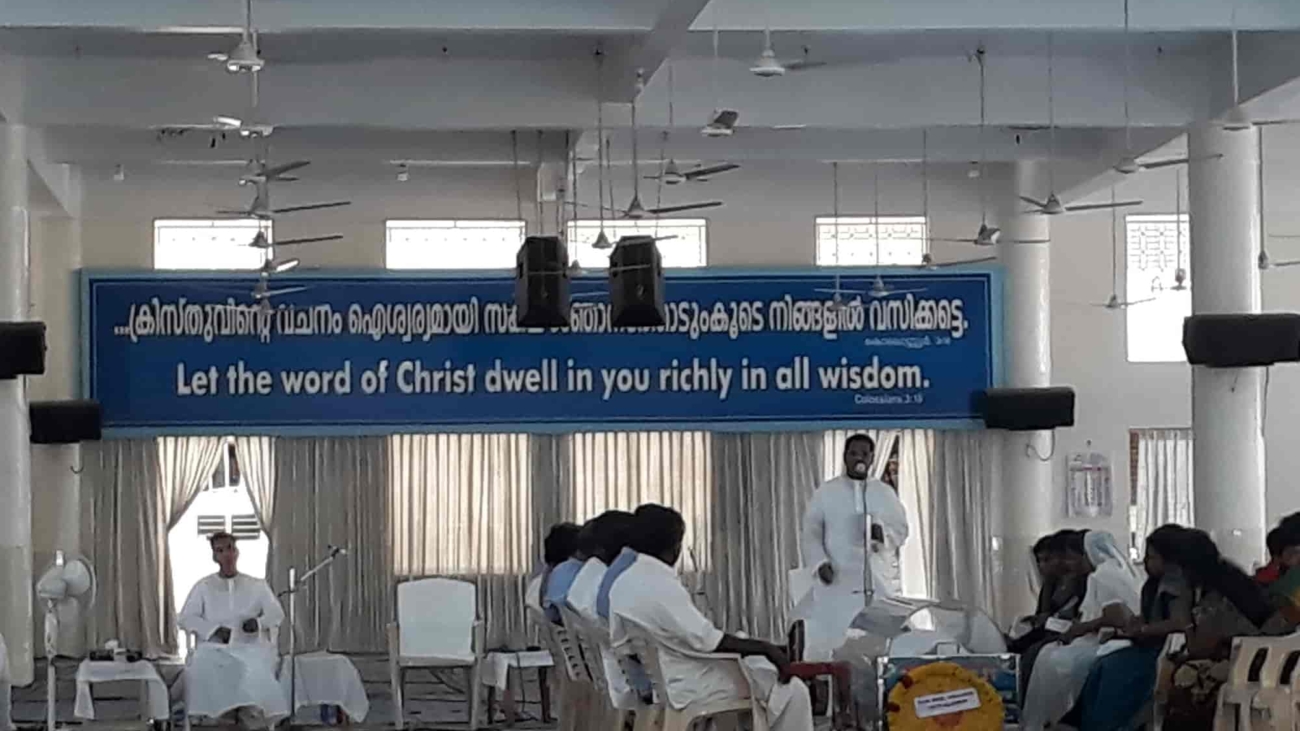
By the 1960s and 1970s, Pentecostal congregations were already functioning as informal training grounds for public speaking, leadership, logistics, and event management. Youth were routinely expected to organize conventions, music programs, outreach activities, and fundraising efforts. These were not symbolic roles. They involved coordination, budgeting, time management, and performance under pressure. Long before “soft skills” entered employability frameworks, Pentecostal youth were practicing them weekly.
Kerala’s youth employment challenge has structural roots. According to state-level employment surveys, a significant share of unemployed youth are degree holders, particularly in general arts and sciences. Competitive exam culture absorbs years of productive life, with low success probabilities. At the same time, sectors with growing demand, such as logistics, healthcare support, digital services, and skilled trades, face labor shortages. This mismatch is not merely educational; it is cultural. Many young people lack exposure to work rhythms, risk-taking, and continuous skill upgrading.
Pentecostal communities historically normalized work ethic as a moral value. Early IPC leaders emphasized sobriety, punctuality, savings, and avoidance of status-driven consumption. For first-generation urban and semi-urban youth, these norms translated into economic mobility. During the Gulf migration waves from the 1970s onward, Pentecostal networks became information channels for overseas employment, skill certification, and remittance management. While not formal agencies, these networks reduced uncertainty and helped young workers adapt to foreign labor markets.
Vision Kerala 2047 requires internalizing this adaptive capacity within the state rather than exporting it entirely. Youth empowerment must be reframed from job-seeking to skill ownership. The IPC’s decentralized church structure, with thousands of local congregations, provides a scalable platform for community-based skill ecosystems. These congregations already host regular gatherings, maintain youth wings, and possess basic organizational infrastructure. Leveraging these for structured skill development is a natural extension rather than an artificial intervention.
Historically, Pentecostal institutions have shown an ability to adopt new technologies quickly. From early use of audio recordings and print tracts to satellite television and digital streaming, the movement has consistently embraced communication tools. This agility is crucial for 2047, when skill relevance will change rapidly. Short-cycle training in areas like digital marketing operations, audiovisual production, facility management, eldercare support, and logistics coordination can be delivered in modular formats. Community trust reduces dropout rates, a chronic problem in state-run training programs.
Youth empowerment must also address behavioral stability. Kerala’s youth face rising mental health stress linked to unemployment, migration anxiety, and social comparison. Pentecostal communities historically emphasized collective belonging and purpose-driven identity, which acted as informal mental health buffers. While spiritual frameworks vary across society, the underlying principle of peer accountability and shared goals is transferable. Skill programs anchored in community rather than anonymous classrooms are more likely to sustain motivation.
Events in recent history reinforce this point. During the COVID-19 pandemic, Pentecostal youth groups across Kerala organized food distribution, logistics support, and digital outreach at short notice. These activities required coordination, adaptability, and risk management. Many participants later transitioned into paid roles in delivery services, media support, and community health assistance. Crisis revealed capability that routine systems had overlooked.
Vision Kerala 2047 must systematize such pathways. One approach is apprenticeship-linked skill empowerment. IPC-affiliated professionals, many of whom work in healthcare, IT support, trades, and small enterprises, can mentor youth through short apprenticeships. This mirrors historical patterns where skill transmission occurred within trusted networks. Unlike generic internships, community-backed apprenticeships carry reputational accountability on both sides, improving quality and completion rates.
Another critical dimension is migration resilience. Even in 2047, Kerala will remain connected to global labor markets. The goal is not to stop migration, but to ensure it is skill-led rather than desperation-driven. Pentecostal churches have long supported members before and after migration, helping with documentation, accommodation, and reintegration. Formalizing pre-migration skill certification and post-return enterprise support within these networks can convert migration into a circular empowerment process rather than a one-way exit.
Youth empowerment must also recognize cultural capital. Pentecostal youth are heavily involved in music, media production, and stage management through worship and conventions. Kerala’s creative economy, including events, audiovisual services, and digital content, is expanding but fragmented. Recognizing church-based creative practice as legitimate skill experience can open pathways into formal creative industries. This is not about religious content, but about transferable competencies.
Critically, this vision does not imply religious gatekeeping of opportunity. Pentecostal institutions, particularly in Kerala, often draw participants across social boundaries through education and service initiatives. Any empowerment framework must remain open, secular in access, and outcome-oriented. The strength of the IPC lies not in doctrinal control, but in its ability to mobilize youth at scale with minimal bureaucracy.
By 2047, Kerala’s demographic advantage will depend on how productively it engages its youth in a shrinking workforce environment. States that fail to convert youth energy into skill and enterprise will stagnate, regardless of past achievements. Institutions that combine discipline, adaptability, and community trust will matter more than policy documents alone.
The Indian Pentecostal Church of God, forged in movement rather than monument, represents such an institution. Its historical emphasis on personal transformation, collective action, and skillful adaptation aligns closely with the needs of Kerala’s youth economy. If these strengths are consciously aligned with modern skill frameworks, youth empowerment can move from aspiration to architecture.
