
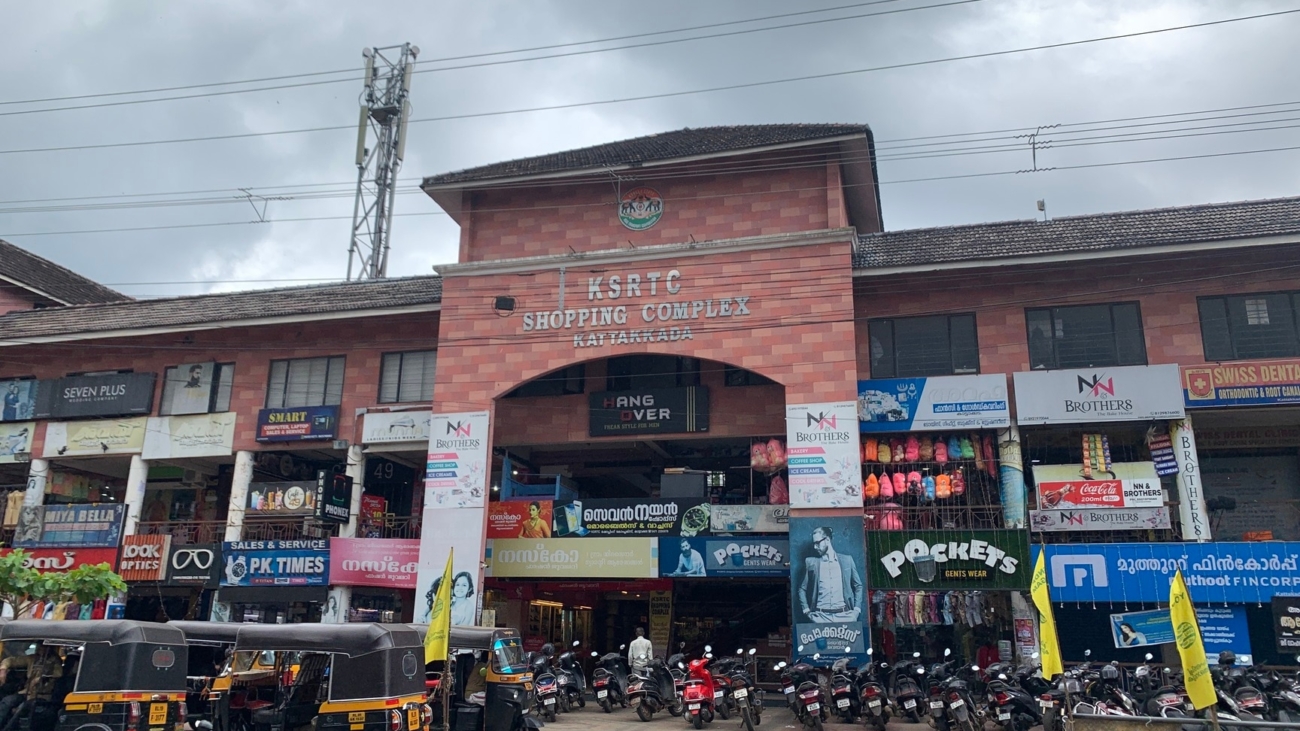
Kattakada taluk, positioned at the eastern gateway of Thiruvananthapuram district, has the land availability, agrarian base, and semi-urban growth needed to develop into a major inland manufacturing zone by 2047. Unlike coastal taluks, Kattakada’s strength lies in its geography—large contiguous land parcels, proximity to the capital city’s knowledge institutions, and strong transport links toward Nedumangad, Neyyattinkara, and Tamil Nadu. Under Kerala Vision 2047, the taluk can shift from primarily agriculture and small workshops to a ₹9,000–₹10,000 crore annual manufacturing economy, compared to the present output of roughly ₹1,000–₹1,400 crore. The goal is to build distributed manufacturing clusters that leverage agro-processing, rubber-based industries, electronics assembly, and green energy systems, while creating 65,000–75,000 direct jobs across the taluk.
Kattakada’s population is expected to stabilise at 7–7.5 lakh by 2047, with a working-age population of nearly 4.2 lakh. The availability of both skilled and semi-skilled labour creates favourable conditions for multi-sector industrial expansion. The first major cluster should be an Agro & Food Processing Park, capitalising on the taluk’s strong production of plantains, vegetables, spices, rubber, and small livestock. With a 30-acre zone built across Kattakada and Maranalloor, the cluster can support modern packhouses, dehydration units, ready-to-cook food units, spice oil extraction plants, and cold-chain logistics. By producing 1,50,000 tonnes of processed products annually, the sector can reach ₹2,000 crore in turnover and generate 15,000 direct jobs. Kerala’s domestic and global markets for minimally processed foods are expanding, providing an opportunity for Kattakada to specialise in clean-label, chemical-free products.
Rubber, one of the region’s biggest natural assets, offers significant potential. A Rubber-Based Industrial Cluster can be developed between Kattakada, Vellarada, and Malayinkeezhu, focusing on automotive components, surgical gloves, footwear, conveyor belts, specialty rubber sheets, and micro-industrial items like gaskets and seals. By 2047, demand for rubber-based engineering goods will increase, especially with electric vehicles and renewable energy systems requiring new materials. Even capturing 15% of Kerala’s rubber product value chain can generate ₹2,500 crore from this taluk alone. With research support from institutions in Thiruvananthapuram, Kattakada can become a leading centre for rubber compounding, testing, and product certification, offering 20,000 skilled jobs.
The third pillar is a Green Energy Components Manufacturing Hub, leveraging Kerala’s transition toward solar and decentralised renewable energy. Located near Palode–Kattakada’s eastern belt, this cluster can produce solar mounting structures, micro-inverters, charge controllers, small wind turbine parts, and battery casings. Even a conservative target of 2 lakh solar mounting kits and 40,000 battery enclosures annually can contribute ₹1,000–₹1,200 crore. The hub can attract Gulf-return engineers and technicians, creating high-value employment with moderate land use. Integration with rooftop solar and local microgrids will reduce operating costs and make the cluster a model of sustainable industrialisation.
A fourth avenue is a Health & Wellness Manufacturing Zone, tied to the presence of Ayurveda centres and emerging wellness tourism in the eastern hills. The zone can host units producing Ayurvedic medicines, herbal cosmetic lines, balms, nutritional supplements, and physiotherapy devices. With wellness markets growing at 10–12% annually worldwide, Kattakada can build a ₹1,000 crore ecosystem with 8,000–10,000 direct jobs by 2047. Establishing GMP-certified units, shared research labs for quality testing, and herbal raw material banks will help scale production while ensuring global compliance.
Electronics assembly, a sector with strong potential across Kerala, can also find a place in Kattakada. A Mini Electronics Assembly Park located near Kattakada–Maranalloor can support 40–50 MSMEs producing LED systems, control boards, small consumer devices, and IoT hardware. Automation will reduce workforce requirements while increasing output reliability. By 2047, the park can reach a turnover of ₹800–₹1,000 crore, supported by 5,000–7,000 jobs. With adequate testing facilities and design studios, the cluster can attract young engineering graduates who prefer accessible job locations rather than migrating to major metros.
A logistics transformation is essential for these clusters to function efficiently. Currently, manufacturers in the taluk face a 12–18% logistics cost penalty due to scattered production, lack of warehousing, and limited cold-chain infrastructure. A Central Logistics & Industrial Services Park spanning 20–25 acres near Kattakada town can resolve this bottleneck. The park would include consolidated warehouses, refrigerated storage, packaging and finishing units, digital freight management centres, and a small container handling yard connected to road networks toward Vizhinjam port. This facility can support ₹4,000–₹5,000 crore worth of annual goods movement by 2047.
Human capital development will define Kattakada’s long-term competitiveness. The goal is to train 12,000 technicians, 5,000 polytechnic graduates, and 20,000 skilled workers every year by 2047 through expanded ITIs, sector-specific academies, rubber technology institutes, and cluster-based training centres. The curriculum must cover industrial automation, food processing technology, rubber product design, materials testing, electronics assembly, and renewable energy systems. Apprenticeship models with guaranteed placements inside the taluk’s clusters can ensure that workers are job-ready and industries have reliable talent pipelines.
Digital transformation is a non-negotiable foundation. By 2047, Kattakada must operate a Manufacturing Digital Grid that interconnects more than 1,000 units across clusters. This platform can provide shared machinery booking, inventory pooling, on-demand design services, bulk raw material procurement, and quality tracking. For small enterprises, digital order management can reduce wastage, improve scheduling efficiency by 20%, and open access to e-commerce and export clients. For large firms, predictive maintenance and energy management systems will reduce overheads and enhance global competitiveness.
Sustainability must remain at the centre of all industrial activity. Kattakada should aim for 70% renewable energy use across industrial estates by 2047 through rooftop solar, community solar parks, and local storage systems. All clusters must implement zero-liquid discharge norms, air-quality monitoring, and eco-sensitive buffer zones. Waste from agro-processing should feed composting or biogas plants, while rubber and plastic scrap should be repurposed into insulation materials, footwear, or secondary products. A circular manufacturing zone can turn waste into economic value.
By implementing this multi-layered roadmap with discipline and long-term vision, Kattakada can emerge as a major inland manufacturing hub of Kerala by 2047. With ₹9,000–₹10,000 crore in annual output, 65,000–75,000 direct jobs, sector-specific clusters, digitised production systems, and strong sustainability benchmarks, the taluk will demonstrate how land-rich, semi-urban regions can drive Kerala’s industrial resurgence. Kattakada’s transformation will not only strengthen the district’s economic profile but also contribute significantly to Kerala’s shift from a consumption-driven to a production-driven economy by 2047.
