
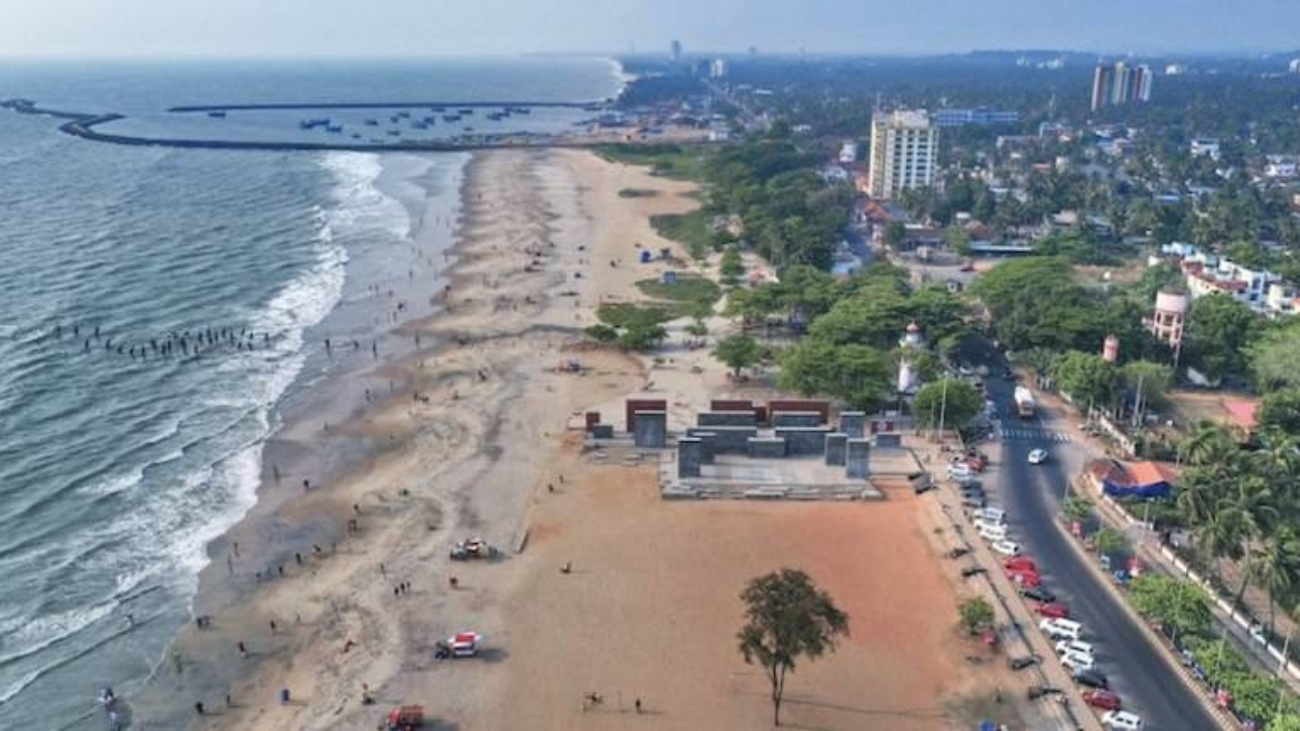
Kozhikode has always been comfortable with balance. Trade and culture, education and enterprise, healthcare and daily life have coexisted here without sharp edges. That balance is its greatest strength, and also its quiet limitation. While other districts chase transformation through disruption, Kozhikode has perfected continuity. It works well. It simply does not grow loud.
Historically, Kozhikode was a global trade city long before modern Kerala existed. That instinct never disappeared. It evolved into a dense ecosystem of small and medium enterprises, educational institutions, hospitals, cultural organisations, and professional services. The city functions with a level of civic trust that is rare. Systems work. People rely on them. That reliability is an economic asset, even if it does not show up in glossy investment decks.
Education is the district’s first anchor. Universities, colleges, coaching centres, research institutions, and cultural spaces operate within a compact geography. Yet most of this capacity remains inward-facing. Degrees are produced, but services are not exported. Academic operations, research support, curriculum services, professional certification, language and documentation work are global markets today. Kozhikode already has the human capital and institutional credibility to serve them. What it lacks is a deliberate push to scale beyond district boundaries.
Healthcare forms the second anchor. Kozhikode is already the medical centre of North Kerala. Patients arrive not because of branding, but because of trust. Public and private hospitals handle scale with competence, affordability, and continuity. This is not a tourism story. It is a services story. Medical training, diagnostics, rehabilitation, long-term care, clinical support services, and health-tech operations can convert existing strength into a structured medical services economy. Healthcare here does not need expansion for prestige. It needs integration for impact.
The third anchor is enterprise. Kozhikode has a deep SME culture—food processing, trade, light manufacturing, services, and crafts. Enterprises survive for decades, but rarely scale aggressively. Risk is managed carefully. That caution preserves livelihoods, but limits reach. Shared compliance services, export facilitation, branding support, and logistics integration can help SMEs scale without losing their character. The goal is not to turn Kozhikode into an industrial sprawl, but to let its enterprises travel.
What holds Kozhikode back is not lack of capability. It is lack of permission. Permission to think beyond local markets. Permission to professionalise without losing trust. Permission to scale without becoming chaotic. The city’s biggest fear is breaking what already works. That fear is understandable. But stagnation carries its own cost.
Kozhikode’s role in Kerala’s economic map is distinct. It does not need to compete with Ernakulam’s density or Thiruvananthapuram’s policy weight. It anchors North Kerala. It absorbs pressure. It stabilises flows of people, patients, students, and enterprise. Anchors are not fast. They are essential.
In a Kerala where districts are slowly finding their roles, Kozhikode’s future lies in doing what it has always done—only at a larger scale. Knowledge that travels. Healthcare that attracts. Enterprises that export. All without losing the civic trust that made the city work in the first place.
Kozhikode does not need reinvention.
It needs confidence to grow.
