
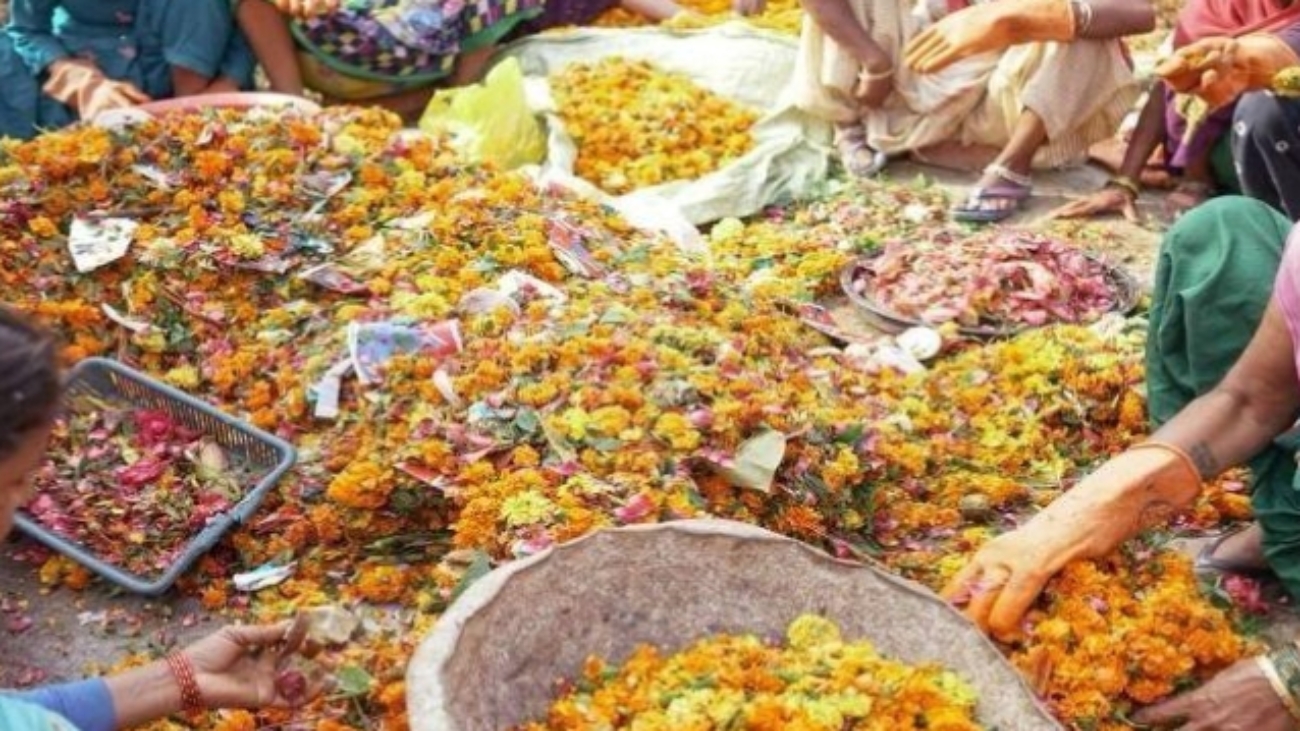
Every day, thousands of temples across Kerala receive large quantities of flowers as offerings from devotees. These flowers symbolize devotion, gratitude, prayer, and cultural continuity. Yet once the rituals are completed, most of these flowers become waste. They are often discarded in water bodies, dumped in landfills, or left to decompose without any structured utilization. What is traditionally viewed as waste may actually represent a significant economic opportunity for Kerala’s rural economy.
Temple flower recycling is emerging as an innovative form of social entrepreneurship in several parts of India. The concept is simple. Flowers collected from temples are transformed into valuable products such as incense sticks, organic fertilizers, natural colors, scented candles, potpourri, essential oils, and eco-friendly religious products. This approach combines environmental protection, employment generation, waste management, and cultural preservation within a single economic model.
Kerala possesses unique advantages that make such an initiative particularly attractive. The state has thousands of temples distributed across villages, towns, and cities. Daily worship, festivals, annual celebrations, and special religious events generate a continuous supply of floral offerings. Unlike seasonal agricultural products, temple flowers are available throughout the year, creating a stable source of raw materials for small manufacturing units.
The environmental benefits of flower recycling are substantial. Floral waste often contains organic matter that decomposes rapidly. When dumped in rivers, ponds, and canals, it can contribute to water pollution and increase biological waste loads. By collecting and processing these flowers, communities can reduce waste entering natural ecosystems. This supports cleaner water bodies and contributes to broader environmental sustainability goals.
One of the most promising products derived from temple flowers is incense sticks. India remains one of the world’s largest consumers of incense products. Recycled flower petals can be dried, processed, and blended with natural binders to create incense sticks that carry a strong spiritual and environmental appeal. Consumers increasingly seek products that align with sustainability values. Incense made from recycled temple flowers offers a compelling story that combines faith with environmental responsibility.
Organic fertilizers represent another significant opportunity. Flower waste contains valuable organic material that can be composted and converted into nutrient-rich fertilizers. Kerala’s growing interest in organic farming creates a natural market for such products. Local farmers can benefit from affordable organic inputs while recycling units generate additional revenue streams from materials that would otherwise be discarded.
Natural dyes offer a niche but potentially profitable market. Different flowers contain pigments that can be extracted and used in textiles, handicrafts, decorative products, and artisanal goods. As global demand for environmentally friendly alternatives grows, naturally derived colorants are attracting increasing attention from consumers and manufacturers alike.
The economic potential extends beyond product manufacturing. Collection, transportation, sorting, drying, processing, packaging, branding, and distribution all create employment opportunities. Women’s self-help groups, cooperatives, youth organizations, and social enterprises can participate across various stages of the value chain. This decentralized model is particularly suitable for Kerala’s strong tradition of cooperative development and community participation.
Temple flower recycling can also strengthen relationships between religious institutions and local communities. Temples often seek meaningful ways to contribute to social development beyond their spiritual role. By partnering with recycling initiatives, temples can support employment generation, environmental conservation, and local entrepreneurship. Such collaborations reinforce the idea that religious institutions can serve as centers of both spiritual and social progress.
The branding possibilities are equally attractive. Products made from recycled temple flowers carry a distinctive identity that few conventional consumer goods can replicate. The connection to sacred spaces, sustainability, traditional values, and community development creates a powerful narrative. These products can appeal to domestic consumers as well as international buyers interested in ethical and environmentally conscious goods.
Kerala’s tourism sector provides another avenue for growth. Millions of visitors travel to the state each year seeking cultural, spiritual, and ecological experiences. Temple flower products can be positioned as authentic Kerala souvenirs. Incense sticks, handmade candles, organic products, and decorative items derived from temple flowers could become popular purchases among tourists looking for meaningful local products.
Digital commerce further expands market opportunities. Small producers are no longer limited to local markets. Through online platforms, social media marketing, and direct-to-consumer sales, temple flower products can reach customers across India and abroad. Storytelling, transparency, and sustainability credentials can help these products stand out in competitive markets.
Several operational challenges must be addressed for such initiatives to succeed. Consistent collection systems need to be established. Storage and transportation infrastructure must be developed to prevent spoilage. Product quality standards are essential for building consumer trust. Training programs will be required to equip workers with the necessary technical skills. These challenges are manageable but require careful planning and institutional support.
Government agencies, local self-government institutions, temples, cooperatives, and entrepreneurs can all play complementary roles. Public support may include training programs, small business financing, infrastructure assistance, and market development initiatives. Educational institutions can contribute research on product innovation and process optimization. Together, these stakeholders can build a robust ecosystem around flower recycling.
Kerala has often demonstrated its ability to transform social challenges into opportunities through collective action and innovative thinking. Temple flower recycling represents a similar opportunity. What is currently discarded as waste can become a source of employment, income, environmental protection, and community development. The initiative aligns with the state’s strengths in cooperative enterprise, sustainability, tourism, and cultural heritage.
The vision is simple yet powerful. Every flower offered in devotion can continue its journey beyond the temple walls. Instead of becoming waste, it can create livelihoods, support local businesses, reduce pollution, and generate economic value. In doing so, Kerala can build a unique model of circular economy development rooted in its cultural traditions and spiritual heritage.
Temple flower recycling is more than a waste management project. It is an opportunity to transform devotion into development, sustainability into livelihoods, and cultural heritage into a new engine of rural prosperity. As Kerala searches for innovative pathways toward inclusive growth, the flowers offered each day at its temples may hold the seeds of a remarkable economic transformation.
