
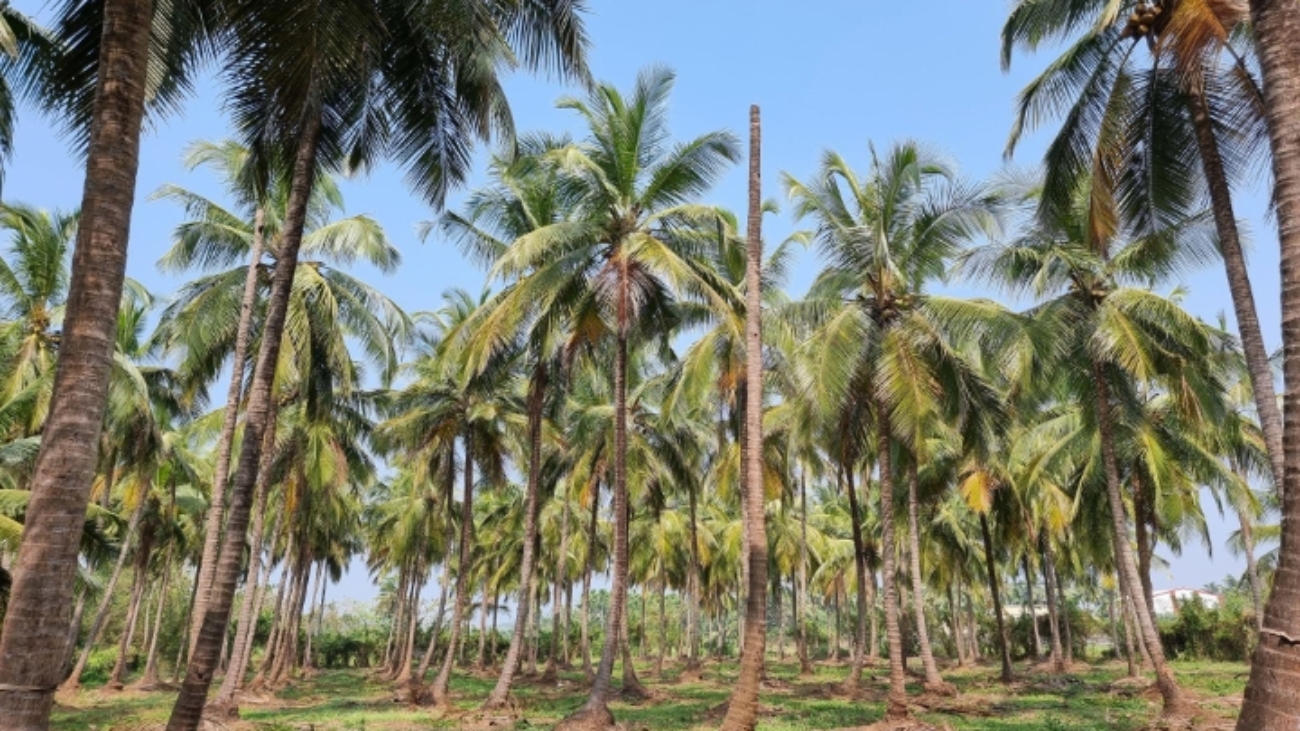
The coconut tree has long been known as the Kalpavriksha, the tree that provides everything. Across Kerala, coconut palms are deeply woven into the state’s culture, cuisine, economy, and landscape. For generations, coconut cultivation has supported rural livelihoods and shaped agricultural traditions. Yet despite this abundance, much of Kerala’s coconut economy continues to depend on the sale of raw or minimally processed products. The future lies not merely in growing more coconuts but in creating greater value from every coconut harvested.
Value addition refers to the process of transforming raw agricultural products into higher-value goods that generate greater income and economic activity. Instead of selling coconuts as a commodity, producers can manufacture a wide range of products that command premium prices in domestic and international markets. This shift can significantly improve farmer incomes while creating employment opportunities across the processing and manufacturing sectors.
Kerala possesses several advantages that make it well positioned to lead a coconut value-addition revolution. The state has a long tradition of coconut cultivation, established processing knowledge, strong agricultural institutions, and growing access to global markets. Coconut products are increasingly in demand due to changing consumer preferences toward natural, organic, and plant-based alternatives.
One of the most successful examples of value addition is virgin coconut oil. Unlike traditional coconut oil, virgin coconut oil is produced through specialized extraction methods that preserve nutritional compounds and natural properties. It is widely used in health products, cosmetics, personal care items, and premium food markets. Global demand for virgin coconut oil has expanded considerably as consumers seek natural wellness products.
The food industry presents numerous opportunities for diversification. Coconut milk, coconut cream, coconut flour, coconut chips, coconut sugar, coconut-based beverages, and plant-based dairy alternatives are becoming increasingly popular. Consumers around the world are embracing healthier diets and exploring alternatives to traditional dairy products. Coconut-based foods fit naturally within these trends.
The rise of plant-based nutrition has created entirely new markets. Coconut milk is widely used in vegan products. Coconut flour serves as a gluten-free alternative for baking. Coconut sugar appeals to health-conscious consumers seeking alternatives to refined sugar. These products often generate significantly higher returns than raw coconut sales.
The cosmetic and personal care sectors offer additional opportunities. Coconut oil, coconut extracts, and coconut-derived ingredients are used in soaps, shampoos, skin care products, lotions, and hair treatments. Kerala’s reputation for Ayurveda and natural wellness products can further strengthen the market appeal of coconut-based personal care brands.
Beyond food and cosmetics, industrial applications continue to expand. Coconut shells can be converted into activated carbon, which is used in water purification systems, air filtration, and industrial processes. Activated carbon derived from coconut shells is highly valued due to its quality and performance characteristics. This transforms what was once considered agricultural waste into a valuable industrial product.
The coir industry demonstrates the power of utilizing every part of the coconut. Coconut husks are processed into coir fiber, which is used in ropes, mats, geotextiles, mattresses, erosion control products, and horticultural applications. Modern engineering applications are creating new demand for coir-based materials as sustainable alternatives to synthetic products.
Environmental sustainability strengthens the economic case for coconut value addition. Modern consumers increasingly favor products with strong sustainability credentials. Coconut-based products often utilize renewable resources and generate less environmental impact compared to many synthetic alternatives. Products derived from every component of the coconut support circular economy principles and minimize waste.
Employment generation is another major benefit. Raw commodity production typically creates limited economic activity beyond farming. Value-added industries require workers in processing, packaging, quality control, marketing, logistics, product development, and export management. This expands employment opportunities throughout rural and semi-urban areas.
Small and medium enterprises can play a central role in this transformation. Not every value-addition venture requires massive industrial investments. Many products can be produced through decentralized processing units serving local clusters of farmers. Cooperative models can further enhance participation and ensure that economic benefits are distributed more broadly across farming communities.
Technology will be an important driver of growth. Modern processing equipment improves product quality, consistency, and efficiency. Digital marketing platforms allow producers to reach consumers directly. E-commerce enables even small businesses to access national and international markets. Technological innovation can help Kerala compete effectively in increasingly sophisticated global supply chains.
Export potential remains particularly significant. Coconut products are sold across Asia, Europe, North America, the Middle East, and Africa. Demand continues to grow for natural ingredients, organic foods, wellness products, and sustainable materials. Kerala’s established reputation in coconut cultivation provides a strong foundation for expanding exports of value-added products.
Branding and geographical identity can further enhance market positioning. Consumers often seek authentic products linked to specific regions and traditions. Kerala’s association with coconuts, Ayurveda, and natural living creates a compelling narrative that can differentiate products in crowded markets. Effective branding can transform agricultural commodities into premium lifestyle products.
Research and development should accompany this transition. Universities, agricultural institutions, and industry partners can collaborate to develop new products, improve processing methods, and identify emerging market opportunities. Innovation will be essential for maintaining competitiveness and responding to changing consumer demands.
Policy support can accelerate progress. Access to finance, infrastructure development, technical training, export assistance, and business incubation programs can help entrepreneurs enter the value-added coconut sector. Public investment in research and quality certification systems can also strengthen industry growth.
The transformation of Kerala’s coconut economy is not simply an agricultural strategy. It represents an industrial development opportunity, an export strategy, a rural employment program, and a pathway toward greater economic resilience. Every coconut harvested contains far more potential than its raw market value suggests.
The challenge for Kerala is to move beyond viewing coconuts primarily as an agricultural commodity. Instead, the coconut should be seen as a platform for innovation, manufacturing, entrepreneurship, and global trade. Each component of the coconut can support multiple industries, creating layers of economic value that extend far beyond the farm.
As global markets increasingly reward sustainability, natural products, and value-added manufacturing, Kerala has an opportunity to reposition itself at the forefront of the coconut economy. By embracing processing, innovation, branding, and export development, the state can unlock new sources of wealth while strengthening the livelihoods of thousands of farming families.
The future of Kerala’s coconut sector will not be determined by the number of trees alone. It will be determined by the creativity, entrepreneurship, and industrial vision applied to every coconut that reaches the market. Through value addition, the humble coconut can become a powerful engine of economic transformation for the state.
